

I am a nurse. I work a three-twelves schedule, and on my days off I sit at my desk doing continuing education, charting catch-up, and the kind of administrative work that follows you home from the hospital. By the time I sit down after dinner, my body has already been on its feet for most of the day. The last thing it wants is to fold itself into a kitchen chair for another two hours.
For about two years I chalked the afternoon fog up to the job. Twelve-hour shifts make you tired. That is just how it works. But I started noticing that the fog hit hardest not after my long hospital days, but on my desk days. The days I sat still. At 3 PM I would stare at the same paragraph for ten minutes. My lower back would ache. My shoulders would round forward toward the screen. I was physically restless but somehow too depleted to stand up and do anything about it.
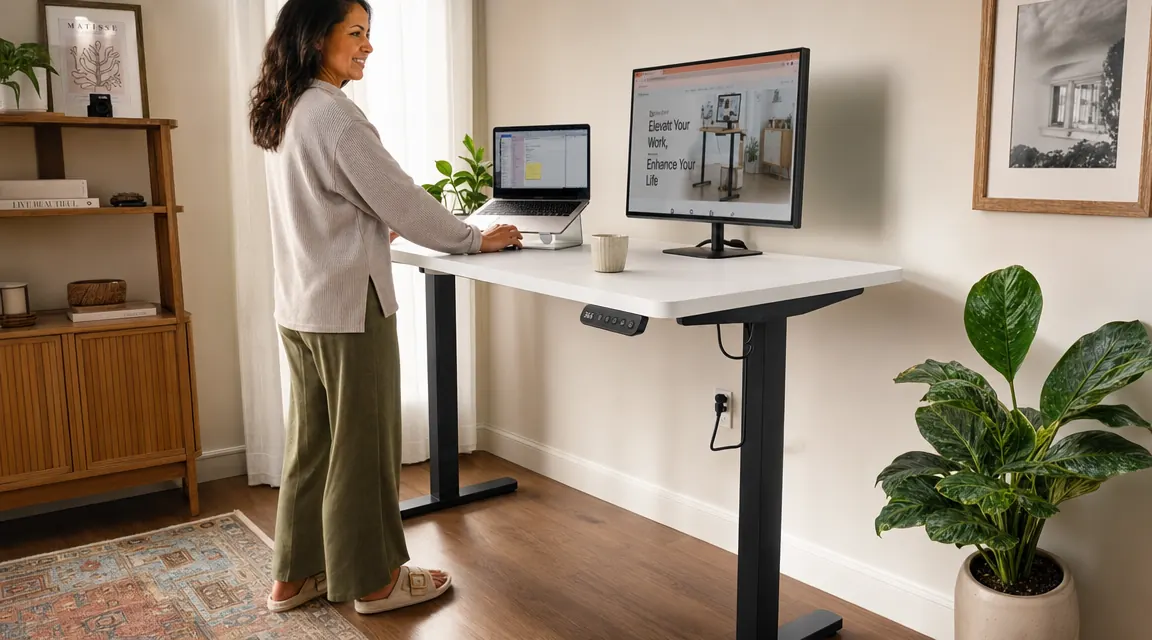
A colleague at the hospital mentioned she had bought a standing desk for her home office. She used it during charting sessions. She said the afternoon slump just kind of stopped. I was skeptical. It sounded like something someone says when they want to justify an office purchase. But she was one of the sharpest, most practical people I knew, so I kept thinking about it.
I did not want to spend a lot of money. I had looked at the high-end brands and they started high and went up fast. I was not building a productivity laboratory. I wanted a desk that went up and down reliably without me having to crank anything by hand. That was the whole requirement. So when I found the ErGear electric standing desk with memory presets at a competitive price, I ordered it mostly to prove to myself that I had tried everything reasonable.
At 3 PM I would stare at the same paragraph for ten minutes. My lower back ached. I was physically restless but somehow too depleted to stand up and do anything about it.
Assembly took me about 45 minutes working alone, which honestly surprised me. I was expecting the usual flat-pack frustration, but the instructions were laid out step by step and the frame went together without any stripped bolts or mysterious leftover pieces. The 48-by-24-inch surface is modest, but it holds my laptop, an external monitor, a small lamp, and a glass of water without feeling crowded.
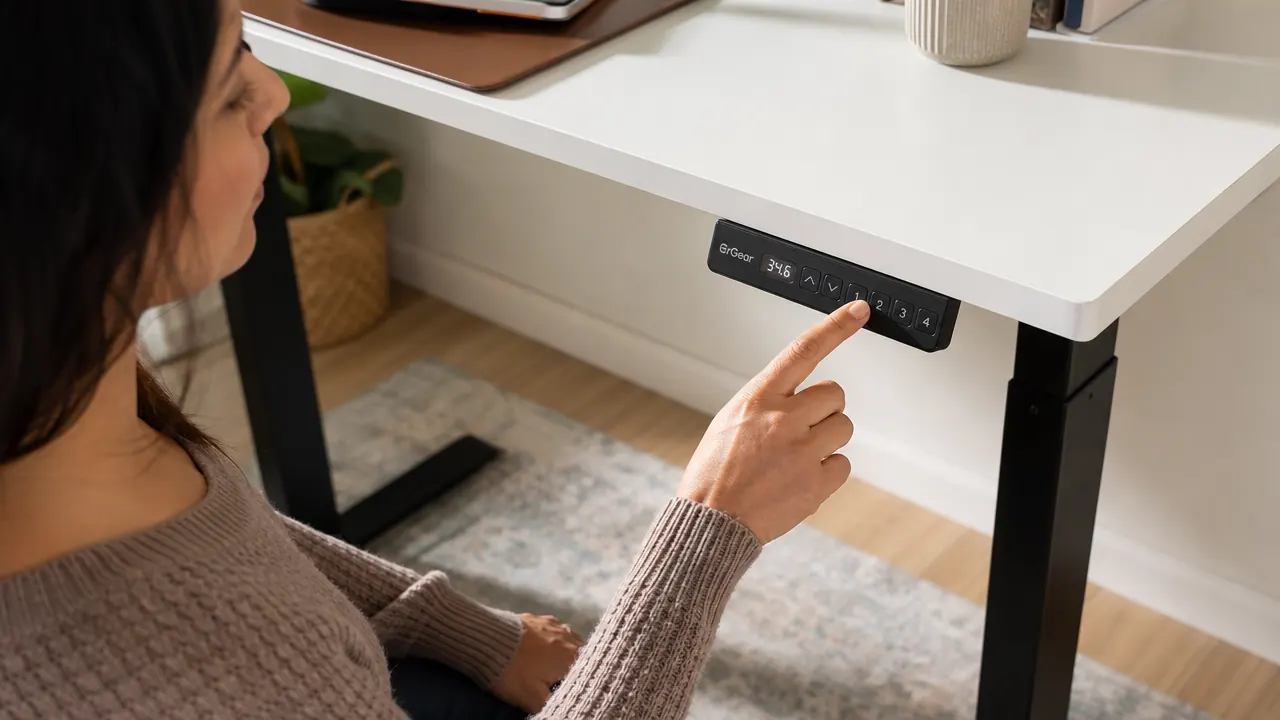
The first thing I programmed was two presets: seated height at 28 inches and standing height at 44 inches. That is where my elbows land when my arms are relaxed at my sides. The motor is quiet. Not silent, but the kind of quiet where you do not worry about waking up a kid in the next room. It takes about eight seconds to travel the full range. I press the button, it goes up, I keep working.
If 3 PM keeps shutting you down, this is the desk worth trying first.
The ErGear electric standing desk has 11,000+ reviews, four memory presets, and a price that does not require a spreadsheet to justify. Check today's price and see if it fits your setup.
Amazon Check Today's Price on Amazon →The change in the afternoons was not dramatic on day one. But by the end of the first week I noticed I was reaching for the up button around 2:30 without thinking about it. I would stand for twenty or thirty minutes, finish a task, sit back down. The act of changing positions seemed to reset something. The fog lifted faster. I got through my to-do list without the usual 3 PM surrender where I just start scrolling my phone.
My lower back stopped complaining in the evenings. I had assumed that was just a nursing thing, permanent and non-negotiable. It turned out that two hours of static sitting after a long shift was the specific thing making it worse. Now on my desk days I alternate throughout the afternoon and by dinner time I actually feel human.
There are things I would tell you are not perfect. The surface has a slight texture that catches scratches if you are not careful with a mug. The cable management options are limited and I ended up buying a separate clip to run cords under the frame. And if you are shorter than about 5'4", double-check the minimum seated height before you order, because some users find the lowest position still a touch high. Those are real trade-offs. For what I paid, I expected them.

What I did not expect was how much it would change the rhythm of an entire workday. I work better standing for certain tasks and better sitting for others. I can feel the difference now. That awareness alone has made me more intentional about how I structure my hours.
What I Would Tell You If We Were Sitting at My Kitchen Table
Here is the honest version. A standing desk will not fix exhaustion from a brutal schedule. If you are running on five hours of sleep and a bad week, standing up while you work will not save the afternoon. But if you are reasonably rested and still hitting a wall at 3 PM? That wall is probably the chair. It is the static posture and the pooling blood and the body screaming at you to move.
The ErGear is not fancy. It does not have a built-in timer that nudges you to stand, or a bamboo surface, or a brand name that impresses anyone. What it has is a reliable motor, a solid frame, and a price point that makes it a reasonable experiment rather than a commitment. I have had mine for four months now and I have pressed those presets probably 300 times without a single issue.
If you are sitting at a fixed desk all afternoon and wondering why you feel worse at the end of a work day than you did after a hospital shift, I would try this before I tried a new chair, a new supplement, or a new daily routine. It fixed the right problem for me. It might fix the right problem for you too.
Four months in, I still reach for that up button every afternoon.
The ErGear electric standing desk is the one I bought, and it is the one I would buy again. See the current price on Amazon and read through the other reviews if you want more detail before deciding.
Amazon Check Today's Price on Amazon →